Why Lighting the Dīpa Pleases Lord Dāmodara

Why Lighting the Dīpa Pleases Lord Dāmodara

Introduction: The Month of Dāmodara

Every year, as the monsoon clouds fade and the cool breeze of autumn fills the air, devotees around the world eagerly await the arrival of Kārtika Māsa—the most sacred and spiritually rewarding month in the entire year. Known as the month of Dāmodara, it is a time when the Supreme Lord, Śrī Kṛṣṇa, reveals His heart most tenderly to His devotees.

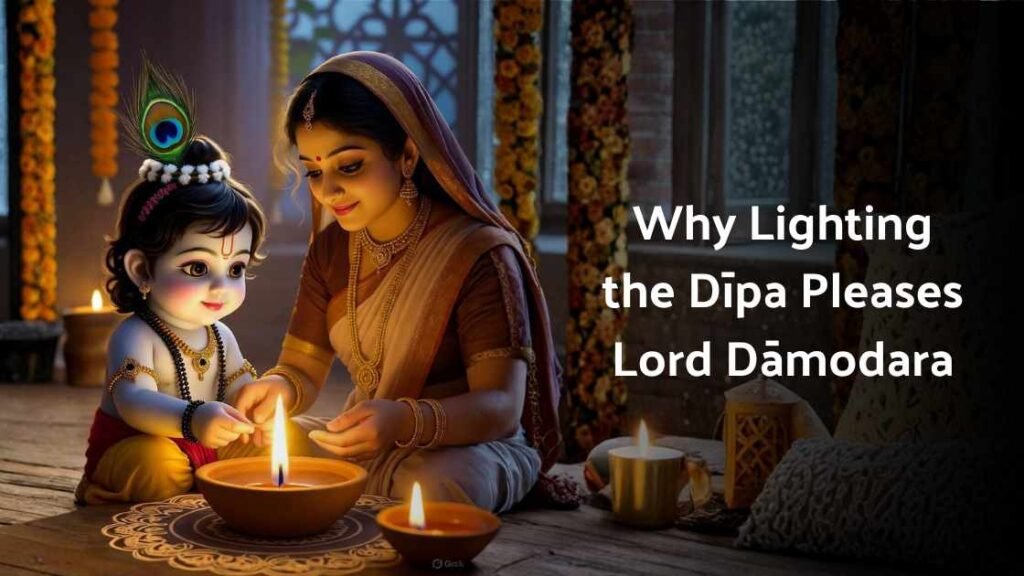
During this month, we remember one of the sweetest pastimes of the Lord—Mother Yaśodā binding little Kṛṣṇa with ropes of love. Despite being the all-powerful Supreme Personality of Godhead, Kṛṣṇa allowed Himself to be tied by His mother’s affection. This endearing pastime, known as the Dāmodara-līlā, beautifully demonstrates that the Lord is conquered not by strength or knowledge, but by pure devotion.

To honor and remember this divine pastime, devotees perform various acts of devotion throughout the month of Kārtika. Among these, one of the most cherished and accessible practices is the offering of a small ghee lamp (Dīpa) to Lord Dāmodara each evening, while singing the Dāmodarāṣṭakam prayers. The sight of countless flickering lamps, offered with love, fills homes and temples with a serene, spiritual glow that touches the heart deeply.

Scriptural Foundation

The glories of offering a lamp during Kārtika Māsa are celebrated throughout the Vedic scriptures. In the Padma Purāṇa, Lord Kṛṣṇa Himself declares:

“Even if one offers a lamp during Kārtika with devotion, whatever sins one has committed for thousands of lifetimes are destroyed.”

This simple yet profound statement reveals the extraordinary mercy available during this sacred month. The act of offering a lamp—something anyone can do, regardless of wealth, status, or background—has the power to cleanse the heart of lifetimes of impurities. It is not the grandeur of the offering that matters, but the devotion (bhāva) with which it is performed.

The Hari-bhakti-vilāsa, a revered Vaiṣṇava text compiled by Śrīla Sanātana Gosvāmī, also glorifies this act, describing that one who offers a lamp to Lord Viṣṇu in Kārtika attains eternal spiritual benefit far greater than performing elaborate sacrifices or austerities. Similarly, in the Skanda Purāṇa, it is stated that offering even a single lamp during this month pleases Lord Hari so greatly that He personally grants liberation and devotion to such a devotee.

Through these scriptural declarations, we understand that the offering of a lamp is not a mere ritual—it is a heartfelt expression of love. The scriptures emphasize that external acts gain meaning only when they are infused with sincere devotion. When a devotee lights a lamp with the intention of pleasing Lord Dāmodara, that simple flame becomes a radiant symbol of the soul’s longing to serve and love the Supreme.

In this way, the Dīpa becomes much more than light—it becomes a bridge of love between the devotee and the Lord.

The Inner Meaning of Lighting a Lamp

The simple act of lighting a lamp holds deep spiritual symbolism. The lamp represents the heart of the devotee — when we offer it to Lord Dāmodara, we are offering the light of our own soul in loving surrender. The flame signifies knowledge and devotion, illuminating the darkness of ignorance within. Each time we light a lamp, we silently pray,

“O Lord Dāmodara, may the light of my heart burn only for You.”
Through this humble act, the practice of Bhakti-yoga comes alive — transforming a small, physical offering into a profound expression of divine love and remembrance.


The Example of Mother Yaśodā and the Dāmodara-līlā

In the heart-melting Dāmodara pastime, Mother Yaśodā binds Lord Kṛṣṇa with ropes of love, showing that the Supreme Lord can be conquered not by strength, but by pure affection. Similarly, when devotees offer a lamp with genuine love, Kṛṣṇa, who is Bhakta-vatsala (affectionate to His devotees), becomes deeply pleased. Just as He was bound by Yaśodā’s devotion, He becomes bound by the sincerity behind every glowing flame offered to Him.


The Spiritual Benefit of Offering a Lamp

Each Dīpa offering during Kārtika brings immense spiritual benefit. The scriptures describe that this act:

  • Burns away sins accumulated over many lifetimes,
  • Grants liberation (mokṣa) from material bondage, and
  • Invokes the direct mercy of Lord Dāmodara.
    Yet beyond all these rewards, the greatest gift is that it awakens loving remembrance (smaraṇam) — the essence of Bhakti. The simple lamp becomes a reminder of the Lord’s beauty, mercy, and presence in our lives.

How to Offer the Dīpa Properly

Here’s a simple way anyone can perform this sacred offering:

  1. Prepare a ghee lamp with a cotton wick and pure ghee (or sesame oil if unavailable).
  2. Light the lamp and offer it before the Deity or a picture of Lord Dāmodara.
  3. Chant the Dāmodarāṣṭakam while offering, meditating on Kṛṣṇa’s childhood form.
  4. Offer with humility and prayer: “Please accept this small light of my devotion.”
  5. Perform this offering daily throughout Kārtika Māsa, preferably during evening ārati.
  6. Encourage family and friends to join — even children can offer a lamp, for Kṛṣṇa accepts love, not sophistication.

Stories & Inspirations

Throughout generations, Vaiṣṇava ācāryas and devotees have emphasized the spiritual potency of this offering. In Vṛndāvana, thousands of lamps illuminate temples and ghāṭas every evening during Kārtika, creating a mesmerizing sea of golden light — a living symbol of devotion.
Śrīla Prabhupāda encouraged devotees to observe this month sincerely, reminding us that these simple acts of Bhakti, when done with love, can attract the Lord’s mercy more than great austerities or rituals ever could.


Lighting the Lamp Within

Ultimately, the purpose of this observance is not just to light an external flame, but to ignite the inner lamp of devotion. Each Dīpa we offer reminds us to keep our spiritual enthusiasm burning brightly, even beyond Kārtika Māsa.

“May this small Dīpa ignite eternal love for Lord Dāmodara in our hearts.”
Let the glow of the lamp inspire us to live every day in remembrance of Kṛṣṇa, allowing the light of Bhakti to shine through our thoughts, words, and actions.


Similar Posts

  • Pitra Paksha Shradh

    पितृपक्ष सेवा को कृष्ण भावनामृत (Krishna Conscious) ढंग से करना ही वास्तव में अपने पूर्वजों के लिए सबसे श्रेष्ठ कल्याणकारी उपाय है। शास्त्रों में कहा गया है कि केवल अन्न-जल अर्पण से उतना लाभ नहीं मिलता जितना कि कृष्ण की भक्ति से मिलता है। यहाँ पितृपक्ष में करने योग्य कृष्णभावनामृत सेवाएँ दी जा रही हैं:…

Leave a Reply

Your email address will not be published. Required fields are marked *